
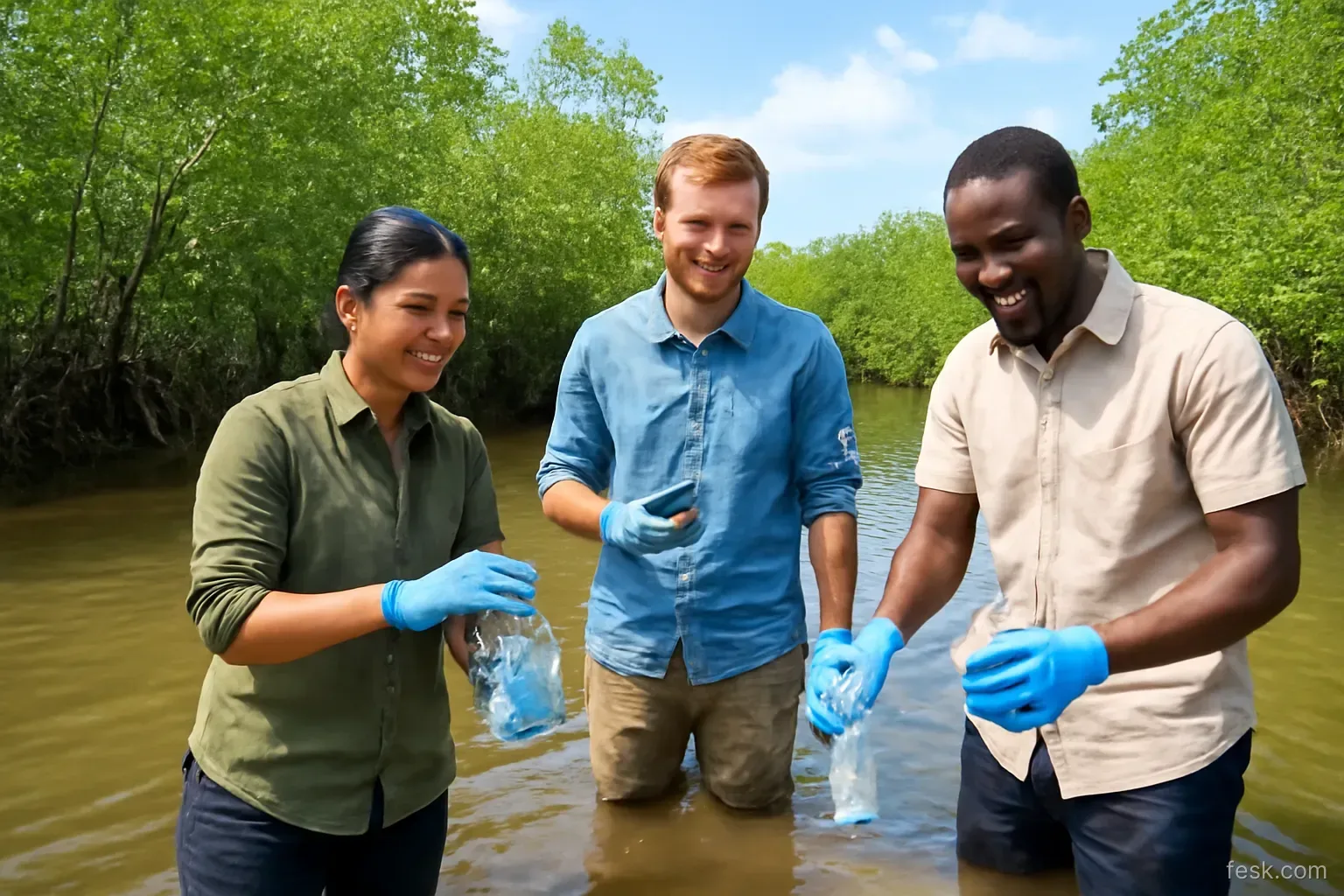
After a conference, an early-career lecturer swaps contact details with four overseas colleagues, each of whom says, “We should do something together.” Three months later, no emails have been sent. A year later, just one contact has produced a joint paper, and it is the one where both sides agreed, right there at the conference, on something tiny: exchange sample datasets within two weeks to see whether they were comparable.
International collaboration brings multi-country data, new techniques, funding opportunities and different perspectives. It also costs more coordination than working alone. This article focuses on the part rarely discussed: turning a promise into a project, and keeping the project from breaking over things nobody agreed at the start.
Start with a small output
Durable collaborations usually climb through levels of increasing commitment:
| Level | Activity | Timescale | Purpose |
|---|---|---|---|
| 1 | Exchange sample data, comment on each other's drafts | A few weeks | Test how you work together |
| 2 | A short paper, a review, or a joint conference panel | 6–12 months | A first shared output |
| 3 | Research visits, student exchange | Weeks to months | Build ties between groups |
| 4 | A joint grant application | 1–2 years to prepare | A large, sustainable project |
Jumping straight to level 4 with a new contact is risky. You don't yet know whether they answer email promptly, meet deadlines or share credit fairly.
Finding the right partner
- Complementary, not duplicate: your group has field data, theirs has analytical methods; or both have data from different settings to compare.
- Matched interest: the project is a priority for both sides, not one side's spare-time extra.
- Someone to keep the rhythm: each side needs a named person responsible for communication, usually an early-career researcher rather than a busy group leader.
Where to look: subject conferences, authors of papers you cite most, alumni networks, visiting scholar programmes and working groups of learned societies.
Funding the early levels
Levels 1 and 2 cost almost nothing except time. From level 3 you need travel money. Common sources include short-term exchange funds at your own university, visiting scholar schemes run by international organisations, bilateral cooperation funds between two countries, and travel grants from learned societies. Conditions and amounts change from year to year, so check official pages and ask your international office. A joint output from level 2 is a strong asset when applying, because it proves the two groups can already work together.
Agree early: five things to write down
Levels 1 and 2 don't need a legal contract, but they do need a short email or document covering:
- Question and scope: what the project will answer, and what it won't.
- Roles: who does what, and who coordinates.
- Data: who owns it, who may access it, where it is stored, whether it may be reused. Personal data must meet each country's data protection rules and each institution's ethics approval.
- Authorship: the principle for author order, referring to ICMJE criteria or your field's norms, and who leads each planned paper.
- Milestones, and what happens if someone falls behind.
At levels 3 and 4, institutions usually require formal agreements, such as collaboration or data sharing agreements. Involve your international office and research office early; signatures can take months.
Avoid lopsided partnerships
One pattern to avoid: a well-resourced team collects data in another country, then analyses and publishes it while local partners appear only in the acknowledgements, or in author positions that don't reflect their contribution. The research community increasingly criticises this, sometimes called helicopter or parachute research. Whichever side you're on, make sure:
- Local partners help frame the questions, not only collect data.
- Some papers are first-authored by local researchers.
- Results go back to the communities where data were collected, in a language they read.
- Capacity is transferred: training in methods, software and procedures.
Working across time zones
- Hold a fixed recurring meeting, say 45 minutes every two weeks, and rotate the inconvenient slot.
- Keep brief minutes: decisions, actions, owners, deadlines.
- Use shared documents with version history, such as Overleaf for LaTeX manuscripts, rather than emailing files back and forth.
- Agree channels: email for decisions, messaging for urgent items, and don't mix them.
- Keep analysis code and data in a version-controlled repository so anyone can rerun the work.
Different working cultures
Some colleagues give blunt comments on drafts; others are very gentle. Some treat deadlines as fixed, others as estimates. Neither is right, but misunderstandings are costly. Ask directly at the start: “How do you like to receive feedback on drafts?” and “If one of us is going to miss a deadline, how much notice should we give?”
Try this: a ninety-day plan after a conference
- Within three days: send a thank-you email recalling what you discussed and proposing one small, specific task with a deadline.
- Weeks 2–4: complete that task and send the result with two or three open questions.
- Month 2: a 45-minute video call to agree the five points above for a first joint output.
- Month 3: an outline or preliminary analysis, and a search for travel or short exchange funding for a visit.
If you can't get past level 1 within ninety days, keep the relationship friendly and redirect your energy elsewhere. After your next conference, choose the single most promising contact and email them proposing one small task that can be done in two weeks.
Câu hỏi thường gặp
How do I find international research collaborators?
Through subject conferences, authors of papers you cite often, alumni networks and visiting scholar programmes. Look for partners whose strengths complement your group's.
How should authorship be agreed in an international collaboration?
Agree the principle early, referring to ICMJE criteria or your field's norms, and decide who leads each planned paper. Put it in writing to avoid disputes later.
Do I need a data sharing agreement for a research collaboration?
For sensitive data or larger projects, yes, and institutions often require one. Personal data must comply with data protection rules and ethics approval in every country involved.
How can a research collaboration work across time zones?
Hold fixed recurring meetings, rotate the inconvenient slot, keep short minutes and use shared documents with version history. Agree which channel is used for which kind of communication.
What is helicopter research?
It describes projects where well-resourced researchers collect data elsewhere and publish without meaningful involvement or credit for local partners. Fair collaborations involve local researchers from the design stage and include local first authors.