
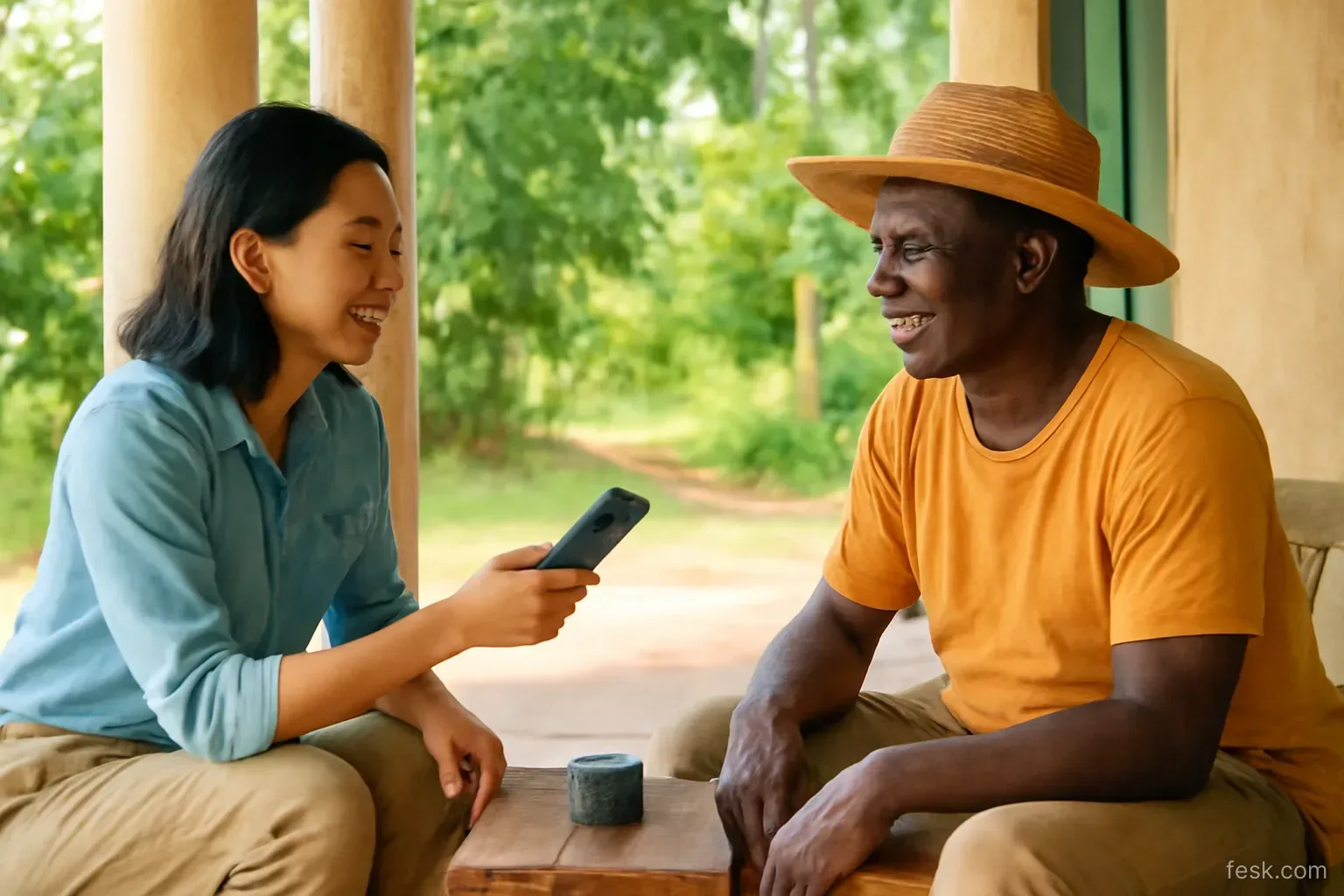
Listening back to your first recorded interview is uncomfortable for most doctoral students. You notice yourself interrupting, answering on the participant’s behalf, and skipping the one follow-up that mattered most: “How did that feel at the time?”. The participant had just mentioned a turning point, and you moved on to question five on your list.
In-depth interviewing is a skill, not a natural conversation. It needs a guide tight enough to stay on topic and loose enough to follow the participant’s story. This piece goes from drafting questions to deciding when to stop collecting data.
The interview guide: fewer questions than you think
Newcomers often draft 25 or 30 questions. The interview then becomes a questionnaire read aloud. A good semi-structured guide usually has six to ten main questions, each with two to four prepared probes. In a sixty-minute interview that gives each main question six to eight minutes of participant talk.
Order them like this:
- Warm-up: easy, contextual (“When did you start teaching at this school?”).
- Grand tour: invite a process narrative (“Walk me through a typical working day”).
- Core questions: tied to your research question, moving from concrete to abstract.
- Contrast: “How is it different now from your first year?”.
- Closing: “Is there anything I haven’t asked that you think is important?”. This often produces the most surprising material.
Question types and probes
| Type | Example | Purpose |
|---|---|---|
| Narrative | Tell me about the last time you had to… | Concrete detail instead of general opinion |
| Example | Could you give me an example? | Anchor abstract answers to events |
| Clarifying | When you say “pressure”, what do you mean? | Avoid imposing your meaning on their words |
| Elaborating | What happened next? | Follow the sequence of events |
| Feeling | How did you feel at that point? | Capture the emotional side of experience |
| Silence | Wait four to five seconds | Give space for the participant to add more |
Silence is the most powerful probe and the hardest to use. Most new interviewers last about two seconds before filling the gap. Participants often add the most important point just after that pause.
Questions to avoid
- Closed questions: “Do you feel under pressure?” invites yes or no. Try “Describe the times when you feel most under pressure.”
- Blunt “why” questions: they can put people on the defensive. “What led you to that decision?” is gentler.
- Theory questions: asking directly about your construct (“How would you rate your professional autonomy?”) makes the participant do the researcher’s job.
- Stacked questions: two questions at once, and only the second gets answered.
Recording, transcription and field notes
Always ask permission to record, capture consent at the start of the recording, and use two devices if the interview would be hard to reschedule. Budget time realistically: manual transcription typically takes four to six hours per recorded hour. Speech-recognition tools cut this dramatically but you still need to listen through and correct, especially names, technical terms and strong accents. If you use an online transcription service, check that it is consistent with the confidentiality promised on your consent form.
Straight after each interview, spend fifteen minutes on field notes: setting, atmosphere, anything said after the recorder was switched off, first analytical hunches. None of this appears in the transcript, and it fades fast.
Online interviews: what changes
Video interviews reach distant participants and save travel costs. But silence is harder to use because it looks like a dropped connection, and participants at home are more easily interrupted. Agree in advance what happens if the call drops, suggest a private space, and send the consent form beforehand so the first ten minutes are not lost to paperwork.
How many interviews are enough?
There is no fixed number. The usual concept is saturation: the point at which new interviews no longer produce meaningful new codes or themes. Empirical studies of saturation suggest that with a fairly homogeneous group and a focused question, most major codes tend to appear within the first nine to twelve interviews; diverse groups or broad questions need more.
Demonstrate saturation rather than merely claiming it:
- Analyse alongside data collection instead of waiting until the end.
- Keep a tracking table of how many new codes each interview adds.
- Set a stopping rule in advance, such as “stop when three consecutive interviews add no important new code”.
- Report the tracking table in an appendix.
Before-and-after checklist for each interview
- Check recorder, battery and storage.
- Bring the information sheet and consent form.
- Reread notes from the last interview to avoid repeating weak probes.
- Prepare a warm-up question to put the participant at ease.
- Close with “anything I haven’t asked?” and thank them.
- Write field notes within the hour.
- Name files by participant code, never real name.
Next step: run a practice interview with a friend who resembles your participants, record it, and measure how much of the time you spoke. If it is more than about 20%, cut questions from your guide and practise waiting four seconds before moving on.
Câu hỏi thường gặp
How many interviews do I need for qualitative research?
There is no fixed number. Studies with fairly homogeneous groups often reach saturation within about nine to twelve interviews, while diverse samples need more. Track new codes per interview and report how you decided to stop.
How many questions should a semi-structured interview have?
Typically six to ten main questions, each with a few prepared probes. More than that tends to turn the interview into a spoken questionnaire with no room for participants’ stories.
How long does it take to transcribe an hour of interview?
Manual transcription usually takes around four to six hours per recorded hour. Automated tools are faster, but you still need to listen through and correct names, jargon and overlapping speech.
What is data saturation in qualitative research?
It is the point where additional interviews no longer yield meaningful new codes or themes for your research question. Show it with a table tracking new codes across interviews rather than simply asserting it.
Are online interviews as good as face-to-face ones?
They can be, especially for geographically dispersed participants. Plan for dropped connections, ask participants to find a private space, and be aware that pauses are harder to use over video.